
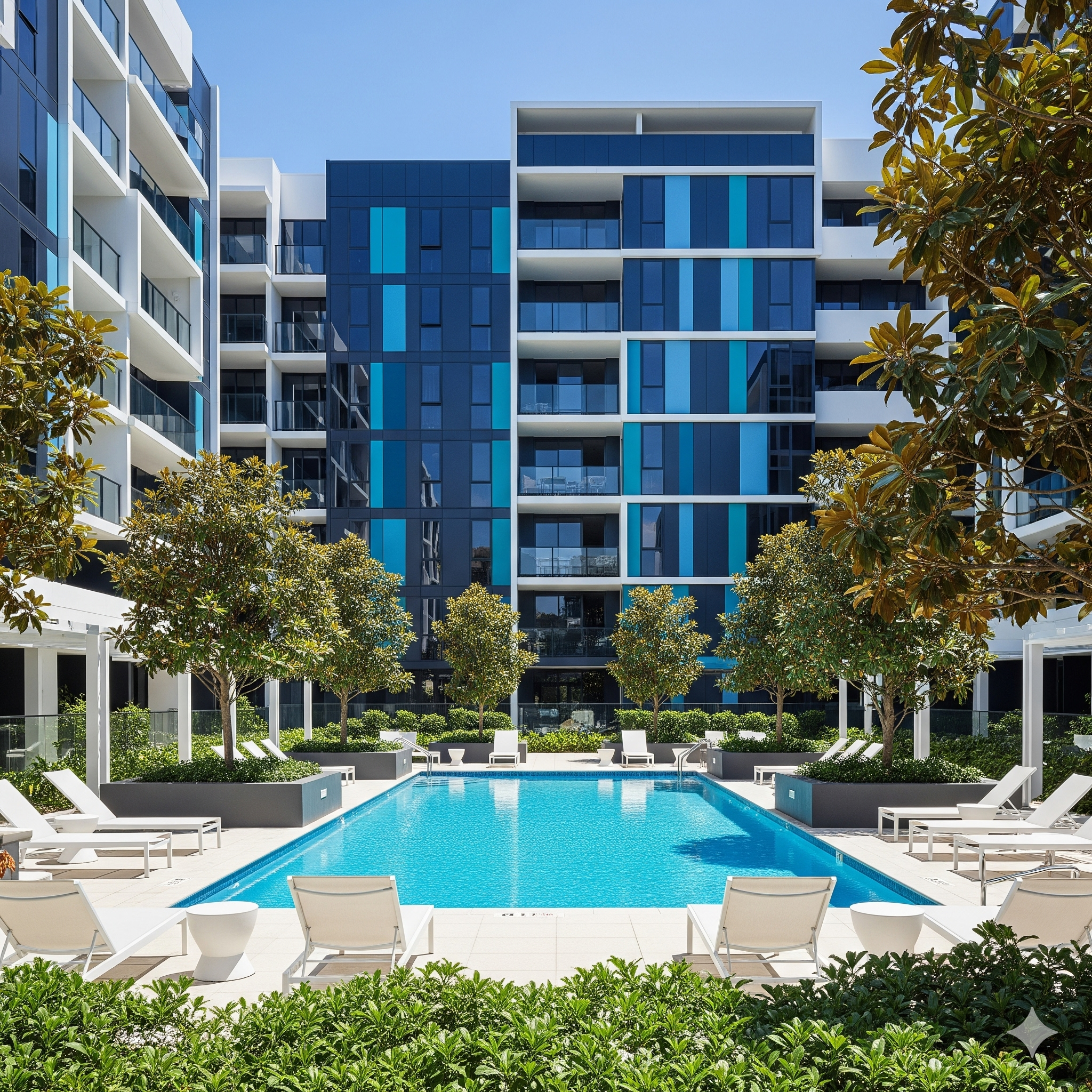
Most people are familiar with strata title properties, but fewer understand community and neighbourhood associations—two types of schemes becoming more common in New South Wales. According to NSW Fair Trading, there are around 350 community associations and 900 neighbourhood associations across the state, and the number is growing.
What Is a Community Association?
A community association is created when a developer registers a deposited plan, often covering a large and diverse piece of land. As lots are sold or subdivided, the membership of the association grows.
These schemes typically manage a mix of residential, retail, and recreational facilities within one estate. For example, you might see:
- Apartment buildings alongside shops or cafés
- Shared roads, cycleways, and footpaths
- Landscaped gardens and parks
- Golf courses, swimming pools, or playgrounds
This combination of facilities is known as association property and is managed collectively by the community association.
How Community Schemes Are Managed
A community scheme committee runs the association, much like a strata committee does in a traditional scheme. The committee:
- Holds annual general meetings and special meetings when required
- Votes on motions submitted by owners entitled to vote
- Enforces the scheme’s unique set of by-laws
Apartment buildings within a community scheme may also have their own strata schemes. This means residents could be subject to both community association rules and strata by-laws simultaneously.
Levies and Funds
Just like in strata, owners in community associations must pay levies. These levies are calculated based on lot entitlements and fund:
- Administrative funds – covering day-to-day maintenance such as gardening or cleaning shared roads and facilities
- Capital (sinking) funds – set aside for major works like resurfacing roads or upgrading shared amenities
Depending on your property, you may pay levies to both your strata scheme and your community association.
Buying Into a Community or Neighbourhood Association
If you’re considering purchasing, it’s essential to request a Section 26 Certificate. This document outlines:
- Executive committee details
- Levies payable (including any arrears)
- The scheme’s by-laws, via the management statement
Because by-laws for the community association may differ from those in your building’s strata scheme, you may need dual approvals for renovations or changes to your lot.
The Role of the Managing Agent
Community associations, like strata schemes, often appoint a community managing agent. This agent must hold a current licence and is appointed at a general meeting by majority vote. Their role is to support the committee with compliance, financial management, and administration.
Metro Strata’s Advice
At Metro Strata, we’ve seen how the complexity of layered schemes can surprise new owners. Our advice is to:
- Review both strata and community by-laws before buying
- Understand the full levy commitments for both schemes
- Clarify how decision-making works across the two layers
- Seek guidance early to avoid disputes and surprises
Final Word
Community and neighbourhood associations are on the rise in NSW, offering residents access to shared facilities and mixed-use environments. But with that comes more complexity than traditional strata.

Get Your Free, No-Obligation Strata Estimate
Curious whether your current strata agency is giving you the best value? Book a free consultation and get a customised strata management fee estimate today. Peace of mind shouldn’t come with hidden costs.




0 Comments